

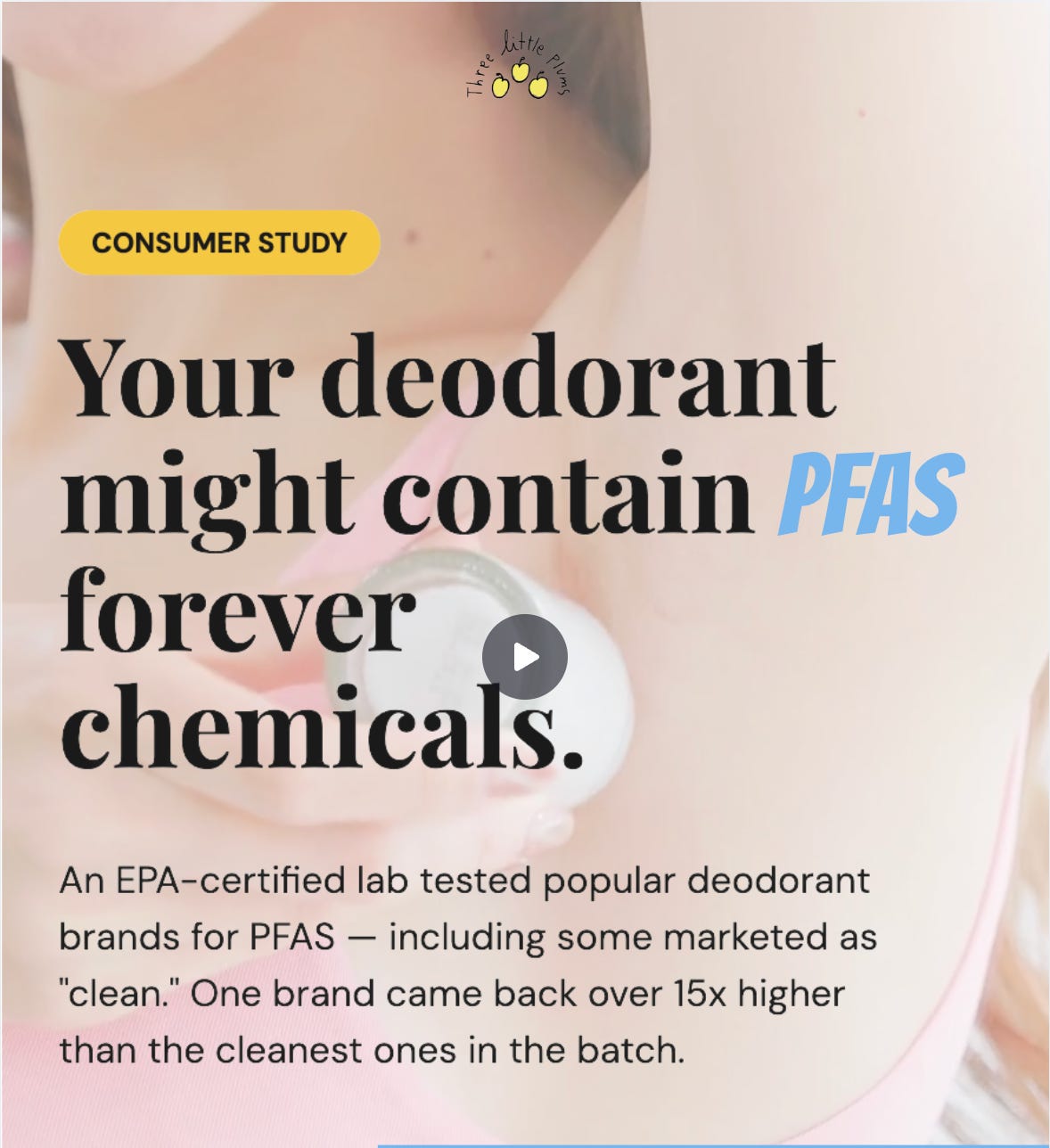
The website Mamavation, working with an EPA-certified laboratory, tested more than 20 popular deodorants — everything from drugstore antiperspirants to boutique tallow balms — for organic fluorine, the marker scientists use to flag PFAS (”forever chemicals”). The result: over 20 products came back with detectable levels, ranging from single digits up to 103 ppm. Both “natural” and conventional formulas were affected, and natural branding didn’t reliably predict a pass or fail.
Below, I’m summarizing what they found, why it matters specifically for a product like deodorant, and the tiered list — highest levels, lower-but-still-detectable levels, and the brands that came back clean. That I recommend
Why this matters for deodorant specifically
A few things make deodorant a different case than, say, a couch or even makeup
It’s applied daily, directly to skin, and stays on for hours,
It’s applied right next to breast tissue and the lymphatic system — an area researchers say deserves extra caution given how PFAS are believed to behave in the body.
Your armpits absorb substances at a significantly higher rates than the rest of your body. In fact, classic dermatology studies show that the underarm (axilla) is 3-4 times more permeable than a baseline area like your forearm
PFAS are persistent. These compounds don’t break down easily and can build up in the body over years of repeated exposure. Research has linked them to thyroid, fertility, and immune effects, though causal links in humans are still an active area of study. Basically it is always important to reduce your exposure to PFAS, but especially with products you are eating or using on your body daily.
OF NOTE: This is likely unintentional contamination**, not a listed ingredient. Researchers believe it’s coming from manufacturing aids or packaging rather than a deliberate additive — which is exactly why independent, third-party testing like this matters (a recent study from Million Marker Research Institute found that the vast majority of personal care products tested have undisclosed ingredients, including endocrine disruptors, cancer-causing chemicals, and more. If you’d like to read more on that click here. But bottom line: this Mamavation study is another example of why final product testing is so, so important). Brands often don’t know their own products are affected until someone checks.
The findings, tier by tier
Highest levels detected (organic fluorine, ppm):
| Brand | ppm |
| Rustic Maka Fresh Active Luna Bliss | 77 |
| Mineralized Deodorant Powder, Sensitive Unscented | 67 |
| Pittie Pop Midnight Vanilla | 67 |
| Holy Cow Organix Deodorant | 63 |
| Just Ingredients Eucalyptus Mint | 56 |
| Humble Vanilla & Cardamom (baking soda-free) | 50 |
| Doterra Natural Deodorant with Balance | 41 |
| Amallow Natural Deodorant Unscented | 34 |
| Dr. Teal’s Aluminum Free, Magnesium | 34 |
| Lume Whole Body Deodorant | 32 |
Lower — but still detectable — levels:
| Brand | ppm |
| Apotheke DuJardin Tallow, Vanilla & Tea Tree | 27 |
| Godesana Clay & Tea Tree | 25 |
| Kopari Beach | 18 |
| Attitude Leaves Bar, Herbal Musk | 16 |
| milk + honey, Lavender Tea Tree | 16 |
| Hello Sweet Coconut | 14 |
| Hey Humans Sandalwood Cypress | 14 |
| Magsol Magnesium, Jasmine | 14 |
| Each & Every Rose & Vanilla | 12 |
| Secret Lavender 48HR Invisible Solid | 11 |
| Zebra The Deodorant, Wild Lavender Lemon | 5 |
Non-detect — no organic fluorine found: (full list available below for subscribers)
The full list can be found below (you will need to be a subscriber) however, of those that tested “non detect” my personal recommendation are:
Primally Pure (discount code: 3LITTLEPLUMS)
Plenty of brands came back PFAS-free, but PFAS-free is my floor, not my whole standard — I also look at the full ingredient list for other concerns (fragrance transparency, unnecessary synthetics, that kind of thing). These are the ones that meet both bars for me: no detectible PFAS *and* genuinely clean formulations all the way through.
FULL LIST Non-detect — no organic fluorine found:
